
What Florida Ranchers Need to Know
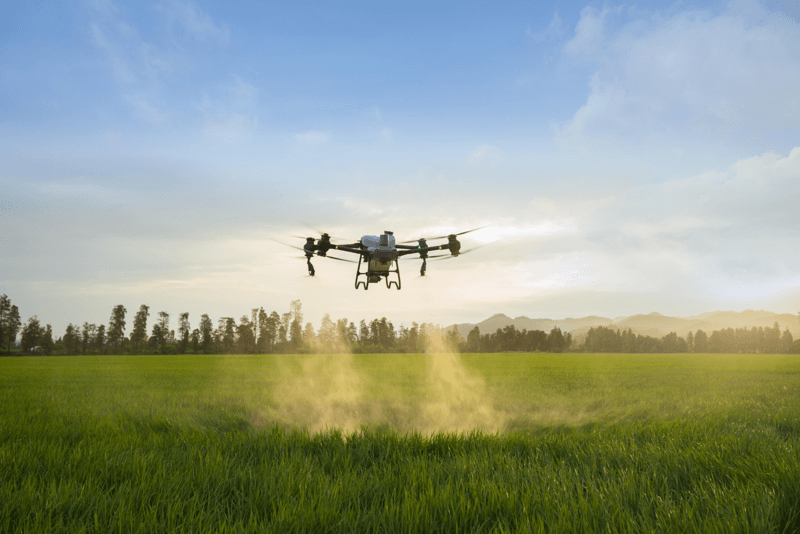
Unmanned aerial vehicles (UAVs) are rapidly reshaping how Florida ranchers approach weed control. As drone technology becomes more advanced, producers want clear answers about herbicide effectiveness, label compliance, and real-world performance in the field.
A recent study by Dr. Brent Sellers and Tenzy Mncube, two respected researchers in Florida’s forage and weed management community, offers some of the most practical data to date on drone herbicide applications in pastures. Their work provides essential, unbiased insight into how modern UAV sprayers compare to traditional ground rigs.
PASUAV is pleased to share a summary of their findings because this research directly supports Florida ranchers evaluating new tools for managing dogfennel, smutgrass, blackberry, and other pasture weeds.
Aerial Herbicide Applications: What Labels Actually Allow
One of the most important takeaways from the study is that nearly all major pasture herbicides permit aerial application, provided applicators follow label instructions—particularly height restrictions (no more than 10 ft above the canopy) and drift mitigation requirements.
Only hexazinone products (e.g., Velpar, Velossa) prohibit aerial use. All other common pasture materials—DuraCor, GrazonNext HL, Pasturegard HL, Chaparral, Milestone, Remedy Ultra, MSM60, Outrider, and others—allow it with minimum spray volumes ranging from 2 to 5 GPA depending on product.
This highlights how well modern herbicide formulations align with low-volume UAV technology.
The 2024 Study: Ground vs. Drone Applications
In July 2024, Sellers and Mncube conducted a controlled field study comparing:
Ground applications at 10, 20, and 30 GPA vs. Drone applications at 2.5 GPA
Two herbicide combinations were tested:
- DuraCor + Pasturegard HL (16 oz/A + 16 oz/A)
- GrazonNext HL + Pasturegard HL (24 oz/A + 16 oz/A)
The target weed was dogfennel averaging 36 inches tall, which is one of the most persistent and costly weeds in Florida pastures. The Use of Drones to Spray Past…
Findings: Equal Performance
At 1 month and 2 months after treatment:
- Drone applications achieved the same visible control as ground rigs at every spray volume tested.
- No performance loss was observed at low volumes (2.5 GPA).
The Use of Drones to Spray Past…
The researchers then tested the drone in more extreme conditions—an abandoned citrus block with dogfennel over 7 feet tall. The same herbicide mixes delivered effective control even in this heavily overgrown environment.
What This Means for Ranchers
With proper calibration and product choice, UAV sprayers can match the results of ground equipment—even with dramatically lower water volumes.
Cost, Terrain, and Practical Advantages
Sellers and Mncube emphasize that drone applications currently cost around $5 more per acre than a traditional ground application. However, they also note key operational advantages:
1. Terrain Access
Drones can spray areas that ground equipment cannot access safely, including:
- Hog-damaged pastures
- Soft or wet ground
- Smutgrass-infested patches
- Dense tree lines and irregular field shapes
The Use of Drones to Spray Past…
2. Reduced Equipment Wear
Avoiding rough or rooted ground protects tractors, ATVs, booms, and tanks—lowering long-term maintenance costs.
3. Potential Future Cost Savings
The researchers note that more data is needed, but drone applications may eventually allow reduced herbicide rates, lowering total input costs.
Full Credit to the Researchers
This article is based entirely on the work of:
- Dr. Brent Sellers – University of Florida / IFAS
- Tenzy Mncube – University of Florida / IFAS
Their full research and all data referenced here come from: “The Use of Drones in Pasture Weed Management”
Special Acknowledgment
The study also credits Hugh MacDonald and Chase Haley of Precision Agricultural Services (PASUAV.com) for assisting with the drone application portion of the research.
PASUAV’s involvement was operational only; the study and analysis belong entirely to the authors and the University of Florida.
What PASUAV Offers Florida Ranchers
Our team at PASUAV is proud to support the advancement of safe and effective aerial application methods in Florida agriculture.
We provide:
- Pasture herbicide application using the DJI Agras platform
- Full-field and spot treatments
- Mapping, drift-controlled precision spraying, and variable-rate options
- Access to difficult terrain with zero compaction and minimal disruption
Our mission is to help ranchers steward their land with integrity, accuracy, and modern tools that protect Florida’s agricultural legacy.