
Gates, fencing, and intrusion indicators
Large properties often span hundreds—or thousands—of acres. Walking or driving fence lines is time-consuming, inconsistent, and exposes personnel to unnecessary risk.
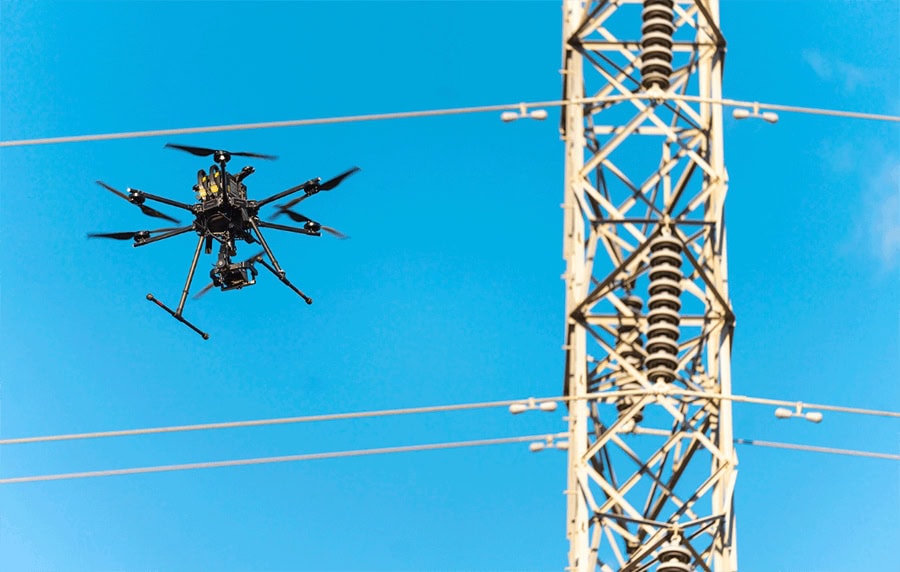
Drone-supported perimeter checks allow operators to:
- Visually confirm gate status (open, closed, damaged, obstructed)
- Inspect long fence lines for breaches, sagging, washouts, or vegetation pressure
- Identify tire tracks, footpaths, or disturbed ground near restricted areas
- Monitor remote access points that are rarely visited but frequently exploited
Operational value:
- Faster verification without pulling staff from core duties
- Early detection of issues before they become security or liability events
- Consistent documentation for maintenance planning and risk management
Remote Facility Checks After Alarms
A verification layer before escalation
When alarms trigger at remote or lightly staffed facilities, the immediate question is simple: Is this a real issue or a false alarm?
Drones provide a rapid aerial check before committing personnel or escalating response.
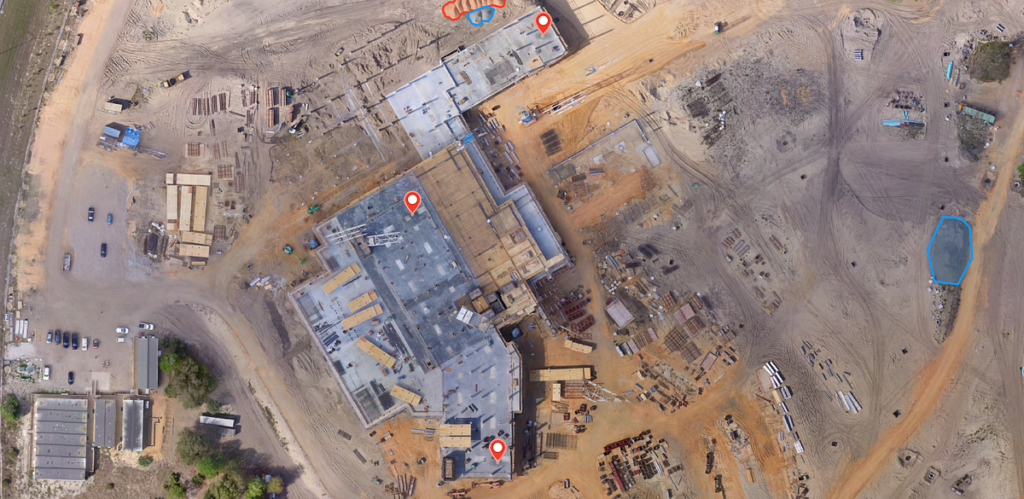
Drone verification can confirm:
- Visible signs of forced entry or perimeter compromise
- Vehicle presence where none should exist
- Structural damage from storms or impacts
- Flooding, debris, or access obstructions
Operational value:
- Reduced false dispatches and unnecessary call-outs
- Faster, better-informed decision-making
- Improved safety by limiting blind responses to unknown conditions
Drones do not replace guards or responders—they help ensure they are sent only when truly needed.
Night Lighting Audits
Identifying coverage gaps and safety improvements
Poor lighting creates blind spots, increases accident risk, and invites unauthorized activity. Many facilities assume their lighting is adequate—until an incident proves otherwise.
Aerial night audits reveal what ground-level checks often miss.
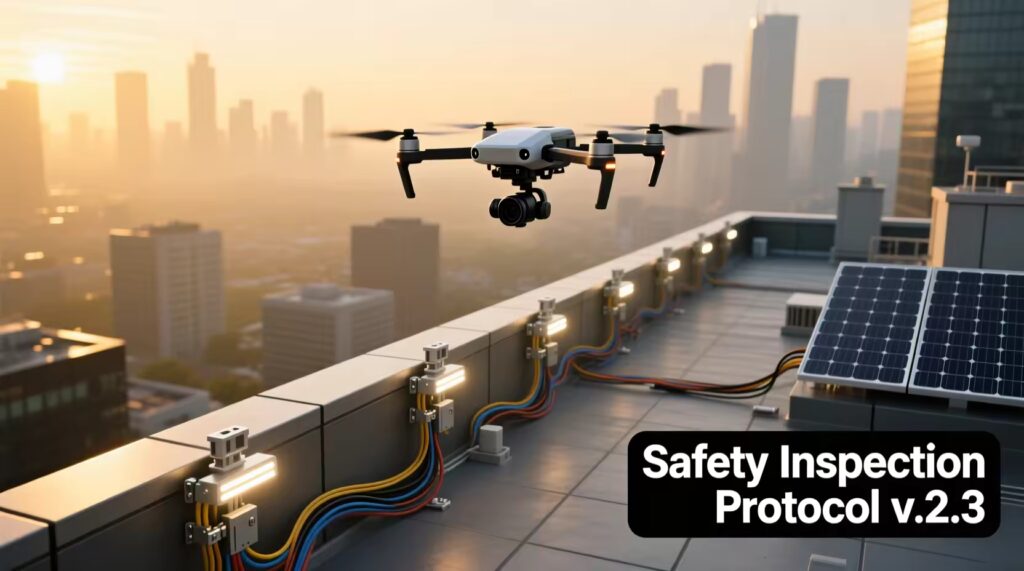
Drone lighting assessments help identify:
- Dark zones between poles or fixtures
- Shadows created by buildings, equipment, or vegetation
- Overlit areas causing glare while adjacent zones remain underlit
- Inefficient fixture placement relative to actual traffic patterns
Operational value:
- Improved employee and contractor safety
- Better deterrence through consistent illumination
- Data-backed justification for lighting upgrades or reconfiguration
Warehouse and Yard Inventory Visibility
High-level, non-invasive oversight
Outdoor yards, laydown areas, and large warehouses often struggle with visibility—not because inventory is missing, but because it’s hard to see all at once.
Drones provide a top-down operational snapshot without interfering with workflows.
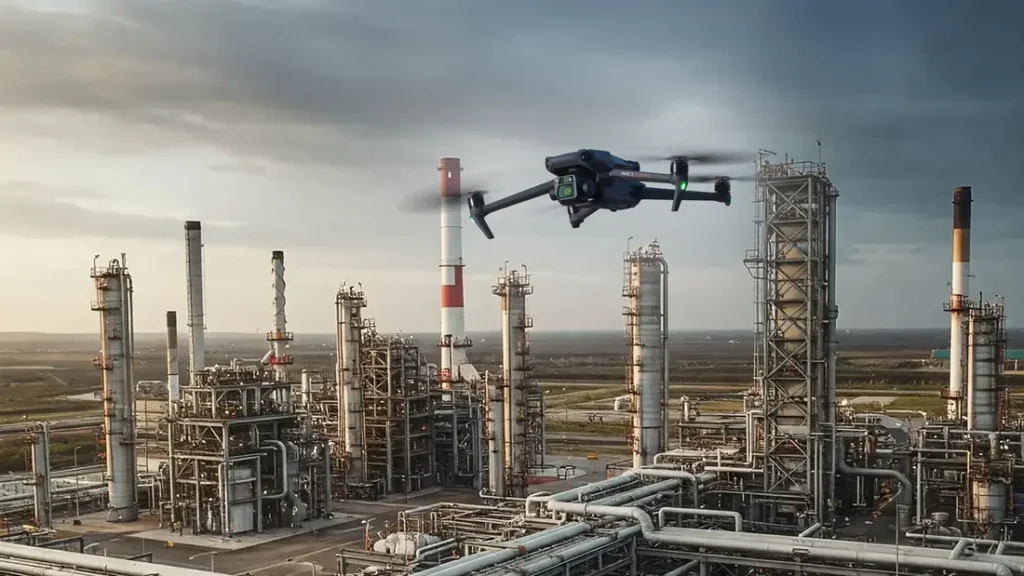
Use cases include:
- Verifying inventory placement and general quantities
- Confirming container, pallet, or equipment locations
- Identifying congestion, bottlenecks, or inefficient layouts
- Supporting audits and internal reporting without manual counts
Operational value:
- Faster inventory awareness
- Reduced disruption to staff and operations
- Visual documentation for planning, logistics, and accountability
A Smarter Layer of Operational Awareness
These applications share a common theme: verification without intrusion.
Commercial drones offer:
- Speed without escalation
- Visibility without disruption
- Documentation without added risk
For operations teams, facility managers, and property owners, drones act as a force multiplier for awareness, helping teams see more, respond smarter, and operate with greater confidence.
In security and operations, knowing what’s happening—before it becomes a problem—is the advantage that matters most.