
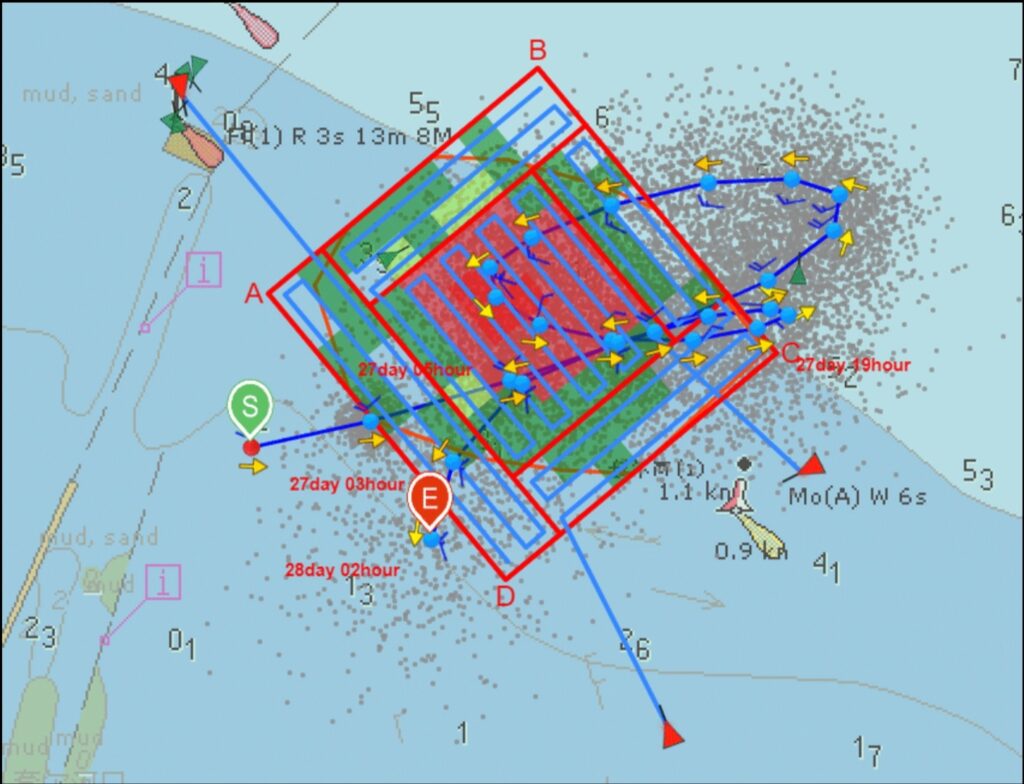
Grid, Sector, and “Last Known Point” Workflows
When time matters, structure saves lives. Modern search-and-rescue operations rely on proven search patterns that balance speed, coverage, and probability. Commercial drones add a critical advantage by delivering rapid aerial visibility, repeatable flight paths, and precise documentation—especially in terrain that is difficult or dangerous for ground teams.
Below is a clear, field-tested breakdown of the three most common missing person search workflows and how professional drone operations support each one.
The Last Known Point (LKP) Workflow
The foundation of nearly every search operation
Definition:
The Last Known Point is the most reliable location where the missing person was confirmed to be present—by eyewitness, vehicle data, phone ping, or physical evidence.
Why it matters:
Statistically, the highest probability of detection is closest to the LKP. Every search expands outward from this anchor.
Drone application:
- Rapid aerial sweep within minutes of deployment
- Identification of trails, paths, water crossings, and terrain transitions
- Visual confirmation of footprints, disturbed vegetation, or abandoned items
- High-resolution imagery to guide ground teams efficiently
Best used when:
- The disappearance is recent
- The LKP is well-defined
- Terrain limits immediate ground access
Grid Search Patterns
Systematic coverage for high-certainty exclusion
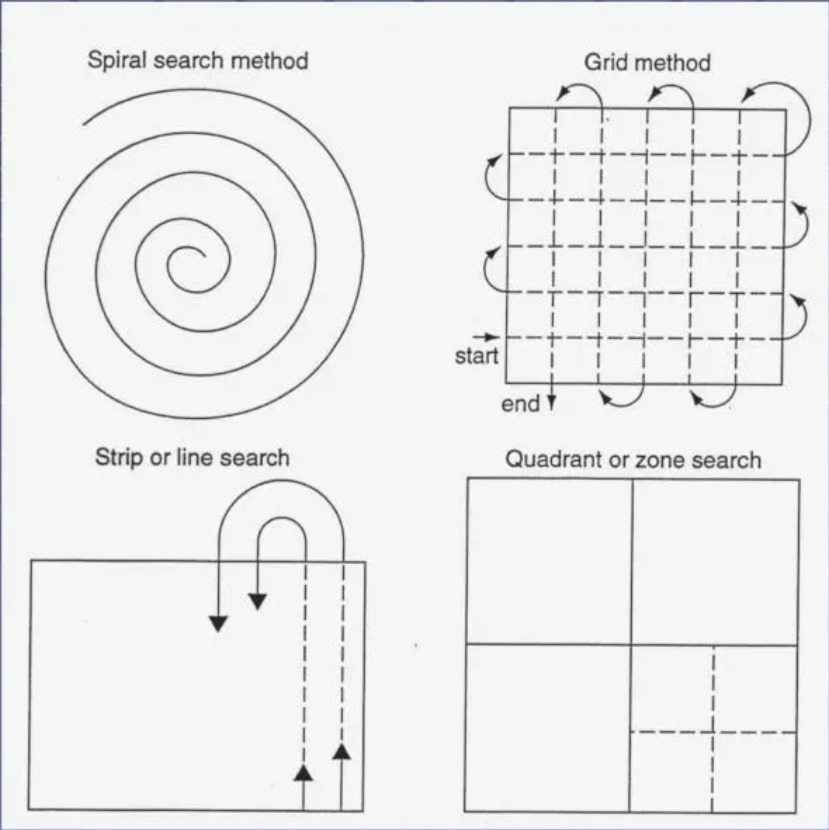
Definition:
A grid search divides an area into evenly sized sections, ensuring no gaps or overlaps. Each grid is searched methodically.
Why it matters:
Grid searches are about certainty, not speed. They confirm that an area has been thoroughly cleared.
Drone application:
- Pre-programmed flight paths for consistent altitude and overlap
- Repeatable passes for verification and rechecks
- Precise mapping of searched vs. unsearched zones
- Reduced fatigue and risk for human searchers
Best used when:
- The search area is defined but large
- Time has passed since disappearance
- Conditions allow slower, methodical coverage
- Documentation is required for command or legal review
Sector (Radial) Search Patterns
Direction-based probability searching
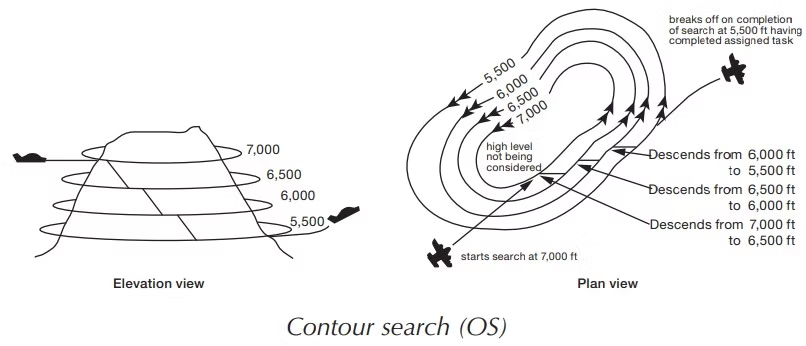
Definition:
Sector searches divide the area around the LKP into wedge-shaped segments, prioritizing likely directions of travel.
Why it matters:
People tend to move along paths of least resistance—trails, roads, ridgelines, drainage paths, or familiar landmarks.
Drone application:
- Fast reconnaissance of high-probability travel routes
- Visual scanning of terrain funnels and natural corridors
- Early identification of hazards or obstacles
- Efficient allocation of ground teams based on aerial findings
Best used when:
- The missing person was mobile at the LKP
- Directional clues exist (witness statements, vehicle direction)
- Terrain naturally channels movement
Why Drones Change the Search Equation
Commercial-grade drones transform traditional search patterns by adding:
- Speed: Immediate deployment without trail or vehicle access
- Perspective: Elevated visibility impossible from the ground
- Consistency: Repeatable patterns with no coverage gaps
- Safety: Reduced exposure for personnel in unstable terrain
- Documentation: Recorded imagery for coordination, review, and accountability
Drones do not replace ground teams—they multiply their effectiveness by ensuring personnel are sent to the right places, faster.
A Structured, Scalable Approach
In real-world operations, these patterns are rarely used in isolation. A typical workflow may look like this:
- Immediate LKP aerial sweep to capture fast-moving clues
- Sector searches to assess likely travel routes
- Grid searches to confirm cleared areas and close probability gaps
This layered approach maximizes detection probability while preserving resources and personnel safety.
Missing Person Search Patterns
Missing person searches are not guesswork—they are probability-driven operations. When professional drone teams integrate grid, sector, and last known point workflows, search leaders gain clearer situational awareness, faster decision-making, and better outcomes.
Commercial drones bring discipline to urgency—and structure to chaos