
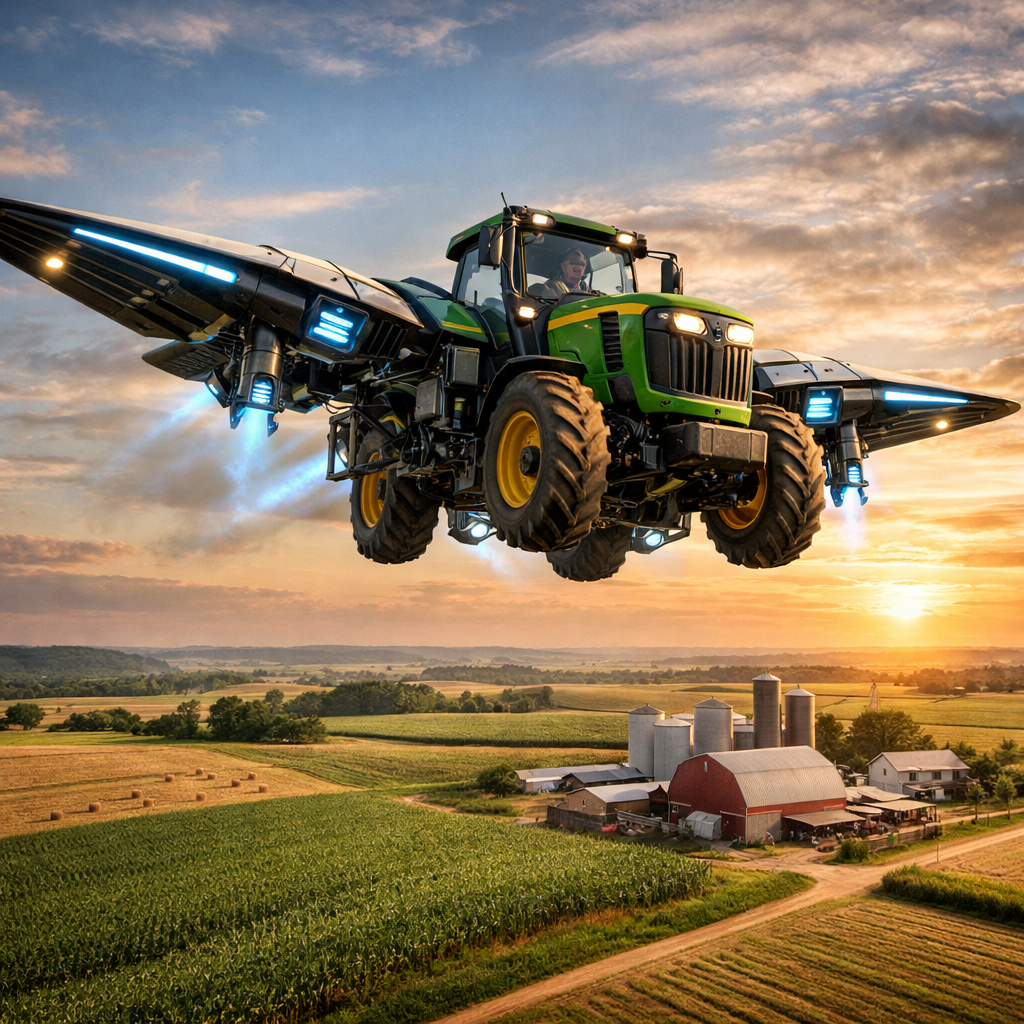
Why Drones Are Becoming Core Farm Infrastructure
Agriculture has always advanced through tools that extend human capability. From animal power to tractors, from irrigation systems to GPS-guided equipment, each leap forward reshaped how food is grown. Today, farming is entering its next major transition: the Flying Tractor era.
Agricultural drones are no longer optional add-ons or experimental gadgets. They are rapidly becoming core farm infrastructure—essential equipment that supports productivity, resilience, and precision across modern operations.
From Equipment to Infrastructure
Tractors earned their place on every farm because they could do many jobs efficiently, reliably, and at scale. Today’s agricultural drones are following the same path.
Modern drones can:
- Apply fertilizers, nutrients, and treatments
- Spread seed and soil amendments
- Monitor crop health and stress
- Map drainage, elevation, and field variability
- Reach wet or inaccessible fields
- Operate without soil compaction or crop damage
Like tractors, drones are multi-purpose machines—but with one key advantage: they work from above, unaffected by terrain, moisture, or crop density.
That makes them uniquely suited to Florida agriculture.
Why Drones Fit Florida Farms Especially Well
Florida’s growing conditions demand speed, accuracy, and flexibility:
- Sudden rain events increase fungal pressure
- Sandy soils are sensitive to compaction
- Specialty crops require precise application
- Fields can become inaccessible at critical moments
- Weather windows for treatment are often narrow
Drones thrive in these conditions. They can be deployed immediately, operate without disturbing the soil, and treat exactly where needed—often on the same day a problem is identified.
This responsiveness is why drones are no longer just tools. They are becoming built-in components of farm operations, just like tractors, sprayers, and irrigation systems.
Precision Is the New Power
Where tractors rely on horsepower, drones rely on precision.
With RTK-guided navigation and advanced flight control, drones deliver inputs with inch-level accuracy. That means:
- Less wasted fertilizer and chemicals
- Reduced runoff into waterways
- Better protection of neighboring crops
- More consistent coverage across fields
- Improved yields with fewer inputs
As farms face rising input costs and tighter margins, precision is no longer a luxury—it’s a requirement.
Infrastructure That Scales With the Farm
One of the defining features of infrastructure is scalability. Drones fit farms of every size:
- Small operations benefit from targeted treatment and lower overhead
- Mid-size farms gain efficiency without adding labor or equipment passes
- Large farms deploy drones to complement tractors and aircraft
Drones don’t replace existing equipment—they integrate with it, filling gaps where ground or aerial systems fall short.
Labor Support, Not Labor Replacement
Like tractors before them, drones reduce physical strain and eliminate dangerous manual tasks. They handle spraying, spreading, and monitoring so farmers and crews can focus on decision-making, planning, and crop management.
At the same time, drones create new skilled roles—pilots, technicians, data analysts—helping modern agriculture attract younger talent while keeping experience and knowledge on the farm.
Infrastructure strengthens the workforce. It doesn’t remove it.
Reliability Makes Infrastructure Trustworthy
No farm relies on equipment that isn’t dependable. As drones become core infrastructure, maintenance and support matter more than ever.
Professional drone programs ensure:
- Proper calibration and accuracy
- Safe operation at higher payloads
- Software and system updates
- Reduced downtime during critical windows
Like tractors, drones must be ready when the farm needs them—not when it’s convenient.
The Flying Tractor Is Here to Stay
Agriculture doesn’t adopt trends—it adopts tools that work. The rapid global expansion of agricultural drones shows that farmers everywhere recognize their value.
Drones are no longer “new technology.” They are essential infrastructure for modern farming.
At PASUAV, we treat drones the same way farmers treat their most trusted equipment: as reliable, precise, and mission-critical tools designed to protect crops, reduce waste, and strengthen long-term farm resilience.
The Flying Tractor era has arrived—and Florida agriculture is already flying forward.