
…and Why Investors Are Betting Big on the Drone Economy
PASUAV – Precision Agricultural Services
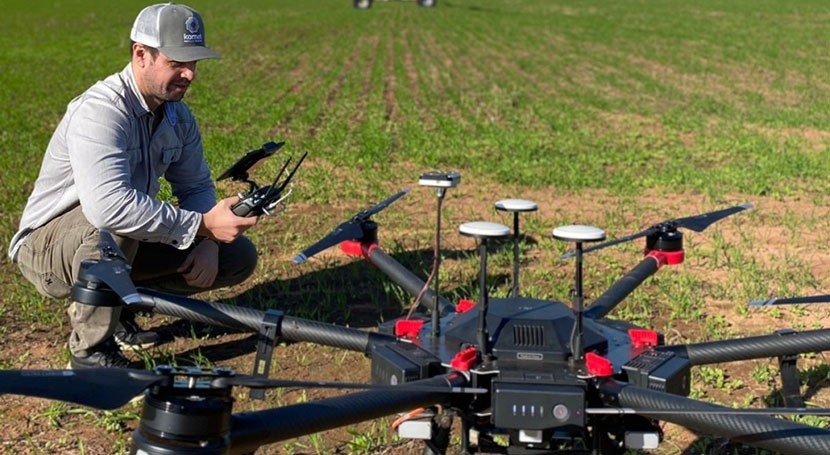
Florida’s farmers are experiencing a shift in how crops are treated, protected, and managed. What once required heavy ground rigs, long labor hours, and weather-dependent scheduling can now be accomplished with fast, precise, and field-friendly drone technology.
This transition isn’t happening quietly. It’s part of a much larger national trend — one strong enough that major investors are pouring money into the drone sector, validating what growers already see happening on the ground.
PASUAV is proud to be at the front of this transformation.
Why Drone Spraying Outperforms Traditional Ground Application
No Soil Compaction — Ever
Ground rigs leave deep tracks and compact the soil, especially in Florida’s soft, moisture-rich strawberry beds. Soil compaction hurts root health, reduces oxygen flow, and limits water absorption.
Drones eliminate this problem entirely, delivering treatments without ever touching the field.
Immediate Access in Wet Conditions
Morning dew, overnight fog, and Florida humidity often keep workers and tractors out of the rows. Diseases like Botrytis and anthracnose thrive in these conditions — and waiting for the field to dry can cost growers valuable time.
Drones fly when humans and machines can’t, allowing timely treatments exactly when the crop needs them.
Better Canopy Penetration
Drone sprayers generate a downward air column that lifts leaves and exposes hidden surfaces. This delivers fine-droplet coverage into the inner canopy — the place where early disease pressure begins.
Ground rigs cannot produce this kind of consistent, top-down coverage.
Faster, More Consistent Spray Intervals
From November through March, strawberries demand tight spray intervals of 5–7 days depending on disease pressure. Weather, labor shortages, and field access make this difficult with traditional equipment.
PASUAV drones complete entire blocks in minutes — not hours — keeping growers on schedule all season.
Safer for Workers, Cleaner for the Crop
Drones keep workers out of treated rows and avoid contamination between pickings during harvest. No tractor operators, no wheel tracks, no physical disturbance.
Investors Are Pouring Money Into the Drone Economy — Here’s Why That Matters
FOX Business reports that the drone economy is booming, and investors now have dedicated financial vehicles to capitalize on it. The newly launched REX Drone ETF (Ticker: DRNZ) allocates roughly 80% of its portfolio to companies whose core revenue comes from drones, UAVs, or drone-supporting technologies.
This level of institutional investment signals something important:
Drone technology is no longer “emerging” — it’s now a core part of the global economy.
According to Greg King, CEO of REX:
“The drones theme is exciting… military applications have proven their utility, but what’s more exciting to us is the commercial applications.”
Commercial drone use — including agriculture — is one of the major growth drivers behind this investment trend.
The article highlights several reasons:
• Defense budgets are shifting heavily toward UAVs
Companies like Ondas Holdings and AeroVironment lead the military UAV space, demonstrating the reliability and efficiency of drone systems under the most demanding conditions.
• Commercial adoption is accelerating across multiple sectors
Investors are backing drones used for:
- Crop monitoring and agricultural spraying
- Pipeline and utility inspections
- Delivery services by Walmart, Amazon, UPS
- Infrastructure monitoring and emergency response
As King explains:
“Monitoring crops or inspecting pipelines… it’s really hard to say which sectors will grow the most. That’s why we have a broad exposure to the theme.”
• Analysts expect the drone industry to grow to $60 billion by 2030
With an annual growth rate of 8–10%, drones are becoming a foundational industry — similar to how robotics and computing transformed manufacturing.
This widespread investor confidence validates what Florida growers already know:
Drone spraying isn’t just better — it’s the future.
And the rest of the world is positioning capital accordingly.
Why This Matters for Florida Farmers
When investors identify a sector as a long-term growth engine, innovation accelerates. Costs drop. Capabilities expand. The technology becomes more advanced, more reliable, and more accessible.
For Florida agriculture, this means:
- Even more precise drone spraying technology
- Higher efficiency and reduced input costs
- Better disease control in critical crop windows
- Greater availability of drone spray services
- Expansion into new crop types and farm sizes
PASUAV brings this next-generation capability directly to the farms that need it most — from Plant City strawberries to row crops across the state.
PASUAV: Serving Florida Farmers With the Technology the World Is Investing In
Drone spraying is no longer a novelty. It is the new standard for modern agriculture, backed by both real-world performance and multimillion-dollar investment across global markets.
PASUAV is committed to delivering:
- Precise applications
- Faster service
- Lower crop disturbance
- Consistent coverage
- Faith-driven integrity and reliability
Whether you need disease control, foliar nutrition, or between-harvest spot treatments, PASUAV is ready to support your fields with the same technology powering one of the world’s fastest-growing industries.
Call PASUAV Today for Scheduling or a Custom Quote
Reach out today to secure spray blocks during Florida’s peak season or request a customized service plan.
The future of farming is airborne — and it’s available to your fields right now.