
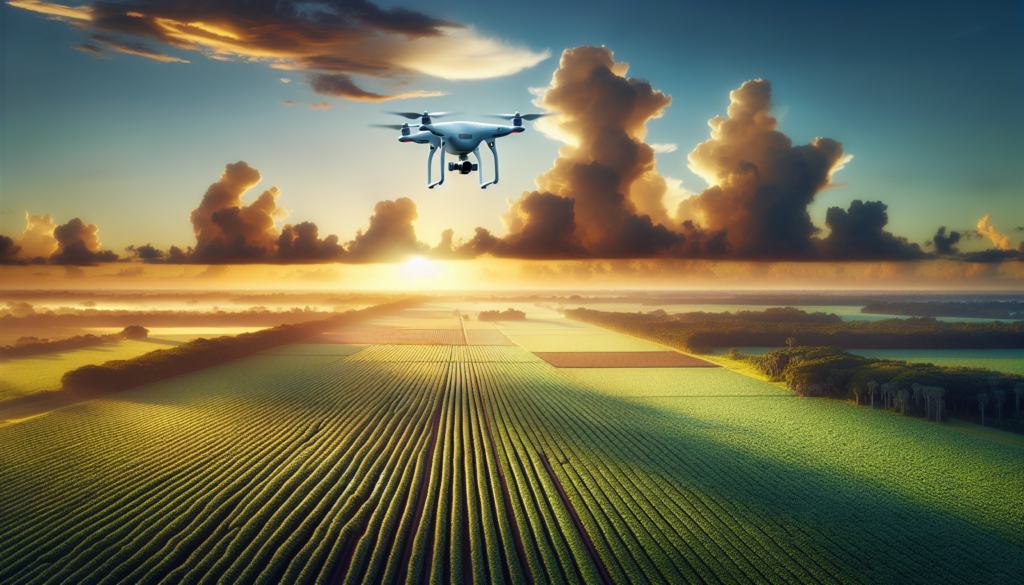
February in Central Florida means spring planting is just around the corner. While other farmers might be waiting for the ground to thaw, Florida growers are already planning their approach. And increasingly, that planning starts with a view from above.
Pre-season drone assessments give farmers the information they need to make smart decisions before the first seed goes in the ground. It is not about fancy technology for its own sake—it is about starting the season with your eyes open.
What a Pre-Season Flight Reveals
Before you commit resources to a field, it helps to know exactly what you are working with. A drone survey can reveal conditions that are invisible from the cab of a tractor:
- Drainage patterns: Where water collects and flows after rain. Low spots that stay wet too long can delay planting or drown young plants.
- Compaction zones: Areas where equipment traffic has hardened the soil, restricting root growth and water infiltration.
- Residue distribution: How evenly last season’s crop residue is spread. Uneven residue can cause planting problems and inconsistent emergence.
- Erosion damage: Gullies, washouts, or soil movement that occurred over the winter months.
- Boundary verification: Confirming field edges, buffer zones, and any encroachments that need addressing.
Making This Information Actionable
Data is only valuable if it changes decisions. Here is how pre-season drone assessment translates into better outcomes:
Zone-Based Planning
Instead of treating every acre the same, you can adjust your approach based on what the imagery shows. Problem areas might need extra tillage, different seed varieties, or adjusted planting dates. Good areas can receive standard treatment without wasting time on unnecessary interventions.
Equipment Preparation
Knowing your field conditions helps you set up equipment correctly before you start. If compaction is widespread, you might plan for deep tillage. If drainage is an issue in certain zones, you can route traffic to avoid making it worse.
Input Allocation
Pre-season mapping can inform variable rate prescriptions for seed, fertilizer, and other inputs. Why put the same amount everywhere when you know some areas will perform differently?
The Stewardship Angle
For farmers who take seriously their role as stewards of the land, pre-season assessment is an act of responsibility. You cannot care for what you do not understand.
Proverbs 27:23 says, “Be sure you know the condition of your flocks, give careful attention to your herds.” The same wisdom applies to fields. Knowing your land—truly knowing it—is the foundation of good management.
When you identify erosion early, you can address it before it gets worse. When you spot drainage problems, you can fix them before they cost you yield. This is not just good business; it is faithful stewardship of resources entrusted to your care.
Timing Your Assessment
The ideal time for a pre-season drone flight depends on your operation:
- After winter rains: Drainage patterns are most visible when soil is saturated or recently drained.
- Before tillage: Residue patterns and surface conditions are easier to assess before equipment disturbs the field.
- With enough lead time: Give yourself time to act on what you learn. A week before planting is too late for major adjustments.
For most Florida operations, late January through early March is the sweet spot—enough time has passed since harvest to see how fields weathered the off-season, but early enough to make meaningful changes.
What to Expect from the Process
A typical pre-season assessment with Precision Aerial Services involves:
- Flight planning: We determine the best coverage pattern, altitude, and timing based on your fields and goals.
- Data collection: High-resolution RGB imagery captures visible conditions. For deeper analysis, multispectral sensors can be added.
- Processing: Raw images are stitched into detailed maps you can use for planning.
- Delivery: You receive files compatible with your farm management software, plus visual reports highlighting areas of concern.
The goal is not to overwhelm you with data, but to give you clear, actionable information that improves your season.
Starting the Season Right
Every farmer knows the feeling of discovering a problem in the middle of planting—a wet spot that bogs down equipment, a compacted zone where nothing emerges right, erosion damage that should have been fixed months ago.
Pre-season drone assessment will not eliminate every surprise. Weather will still happen. Equipment will still break. But it can help you start the season with fewer unknowns and better preparation.
That is the goal: not perfection, but preparation. Knowing your fields well enough to make good decisions from day one.
If you are planning for spring planting and want to see your fields from a new perspective, Hugh MacDonald and the team at Precision Aerial Services are here to help. We understand Florida farming because we are part of this community. Let us talk about what makes sense for your operation.